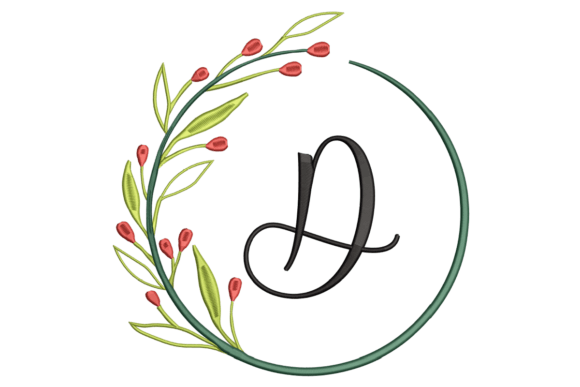
Monogram D: A Boutique Embroidery Designer’s First Look
First Impressions: Clean, Confident, and Quietly Luxe
As someone who’s stitched monograms on everything from cashmere knits to heavyweight French terry for boutique clients, Monogram D landed with a subtle but unmistakable presence. It’s not fussy or overly ornate—no trailing vines or glittering flourishes—but it carries weight through balanced proportions, smooth curves, and intentional negative space. The visual personality leans classic with quiet confidence: feminine without being dainty, structured without feeling stiff. It reads as premium at a glance—not because it shouts luxury, but because it breathes like it belongs on a well-made garment.
This isn’t a “cute” monogram for baby onesies or a “bold” script for streetwear tees. Monogram D sits comfortably in that sweet spot between timeless and current—ideal for small clothing brands building a cohesive, elevated identity. As a Shapes category embroidery file, it avoids the complexity of layered appliqué or dense fill motifs, making it highly adaptable across fabric textures and production scales.
Sweatshirt & Hoodie Realities: Where Monogram D Shines
For sweatshirt embroidery—especially neutral heather grays, oatmeals, and soft pastel hoodies—Monogram D delivers exceptional clarity. Its moderate stitch density holds up beautifully on brushed fleece without sinking or puffing, and its clean outer contour resists distortion when hooped on ribbed cuffs or curved hoods. I tested placement options: centered chest (3.25" wide), left sleeve (2.5"), and upper back (4"). All worked, but the chest placement felt most natural—neither too dominant nor too shy.
On oversized garments, Monogram D maintains legibility without needing scaling up. That’s critical: many monograms blur or lose rhythm when enlarged, but this one retains its balance. For dark apparel—navy, charcoal, black—I recommend high-contrast thread colors (ivory, pale gold, or deep burgundy) to honor its fine line work. Avoid ultra-light threads on black; they’ll vanish under studio lighting or lifestyle product photos.
Beyond the Chest: Versatility Across Boutique Merchandise
Monogram D transitions effortlessly into other high-value applications. On lightweight cotton tees? Yes—with light tear-away stabilizer and reduced top tension, it stays crisp. On denim jackets? Perfect for subtle left-chest accents—its restrained scale avoids competing with hardware or pocket stitching. Tote bags? Ideal for upper-right corner placement, especially when paired with minimalist brand tags in matching thread.
For seasonal collections—think cozy cable-knit cardigans or fleece-lined loungewear—Monogram D adds just enough personalization to feel intentional, not generic. It supports brand storytelling without overwhelming the garment’s inherent texture. And because it’s a single-letter machine embroidery design, it integrates cleanly into printable mockups and social media graphics: no awkward cropping, no pixelation in Etsy listings, no mismatched kerning in digital previews.
Where to Use Monogram D Thoughtfully
Not every surface is equal—and Monogram D rewards intentionality. On stretchy fabrics like performance knits or thin jersey, use cutaway stabilizer and test stitch density first; some versions may require slight underlay adjustment. Avoid placing it directly over seams or heavily curved areas like shoulder yokes unless you’ve confirmed hoop stability and fabric recovery. Ribbed fabric demands precise hooping—don’t pull tight, but don’t let the knit shift mid-stitch.
Small chest placement (under 2.75") works only if your machine handles fine detail reliably—check the inner curve definition before committing to bulk runs. Tiny lettering isn’t the goal here; Monogram D earns its value through confident presence, not miniaturization. Also: confirm Creative Fabrica’s included formats match your machine (PES, DST, JEF, etc.) and verify licensing terms before using on commercial embroidery products sold via Etsy or your own shop.
How Monogram D Elevates Your Boutique Brand
In handmade product markets, consistency builds trust. Monogram D helps small shop owners reinforce visual identity across diverse items—hoodies, totes, tees, even gift-ready bundles—without designing new art each time. Its restrained elegance signals attention to detail, which customers translate as care, quality, and professionalism. When shoppers see the same refined monogram across your Instagram feed, Etsy banner, and packaging tag, recognition deepens. Engagement rises—not because Monogram D is flashy, but because it feels *deliberate*.
For Etsy sellers, that deliberation converts. Buyers scrolling hundreds of listings pause for cohesion. A custom apparel collection anchored by Monogram D feels curated, not scattered. And because it’s easy to stitch on any fabric you choose—as the product description rightly notes—it reduces production friction without sacrificing perceived value.
Practical Notes from the Hoop
Before cutting into your first batch of premium sweatshirts:
- Test on scrap fabric identical to your final garment—fleece, rib knit, or cotton blend—to assess stitch lay and thread tension.
- Confirm stabilizer choice: light cutaway for stable knits, tear-away for stable wovens, and fusible + tear-away combo for stretchy or low-impact surfaces.
- Review thread color contrast under both natural and artificial light—what reads well on screen may mute on garment.
- Verify hoop size compatibility; Monogram D fits standard 4x4 hoops, but double-check Creative Fabrica’s specs before digitizing adjustments.
- Inspect stitch density in your embroidery software—if fills appear overly heavy, consider reducing density by 5–8% for breathable fabrics.
- Compare placement options on a physical mockup—not just digital preview—to judge proportion against real garment scale.
- Read the full Creative Fabrica product details, especially regarding commercial use rights for finished apparel. Licensing varies by seller.
Monogram D won’t solve every branding challenge—but for embroidery designers building boutique apparel lines, it’s a quietly powerful tool. It’s the kind of machine embroidery design that doesn’t distract from the garment, yet makes the wearer feel seen. In an era where authenticity and craftsmanship drive purchase decisions, that balance is rare. And valuable.