Diagonous H: A Bold, Playful Letter That Demands Attention
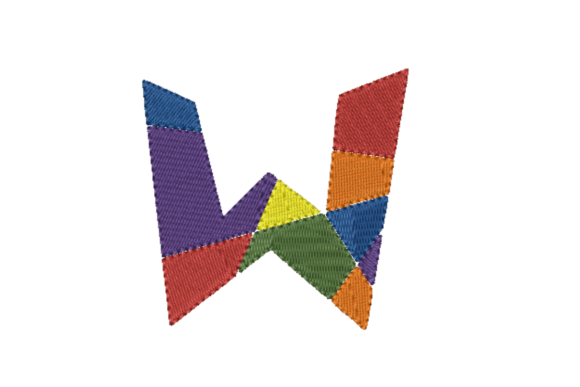
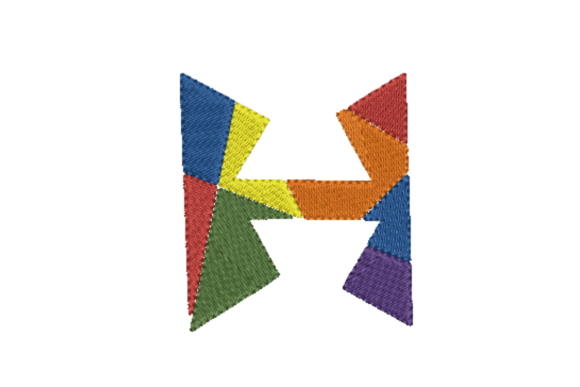
As a designer who’s stitched hundreds of letter-based embroidery files for clients—from boutique baby onesies to limited-run tote collections—I opened Diagonous H expecting something clean and geometric. What I got instead was a spark: a letter that feels like motion frozen mid-swing. The diagonal lines aren’t just angled—they’re energetic, intentional, almost architectural. Primary reds, blues, and yellows sit alongside secondary purples and greens in crisp, confident segments. It doesn’t whisper “H.” It declares it.
I tested Diagonous H on a natural linen tea towel first—soft but textured—and then moved to a medium-weight cotton sweatshirt. Why? Because those are the two most common starting points for small craft businesses: kitchen staples and cozy apparel. On the towel, the diagonals read beautifully at 3.5 inches wide—clean edges, no thread pull, no distortion. On the sweatshirt, with light tear-away stabilizer underneath, the design held its shape without stiffness. No puckering. No sinking into the fleece. That tells me Diagonous H has thoughtful stitch density—not too sparse to look thin, not so dense it fights fabric drape.
This isn’t a delicate monogram. It’s a statement shape. Think: the front chest of a unisex kids’ sweatshirt for a small shop’s back-to-school launch. Or the center of a reversible embroidered patch meant for denim jackets or backpacks. I even mocked it up on a baby blanket corner (using pale mint thread on ivory cotton velour), and the contrast gave it instant warmth—playful but not childish, modern but not cold.
Where Diagonous H Shines—and Where It Needs a Second Look
Diagonous H thrives in context where boldness is part of the brand voice. It works exceptionally well for:
- Custom apparel—especially on structured fabrics like canvas tote bags, twill caps, or woven aprons where diagonal lines echo seam lines and add visual rhythm;
- Embroidered patches—the sharp angles translate cleanly into cut-and-sew applications, and the color-blocking invites easy thread swaps for seasonal palettes;
- Holiday embroidery—swap the primary palette for deep emerald and gold, and it reads instantly as festive without needing snowflakes or bells;
- Digital embroidery file previews—its strong silhouette renders clearly in printable mockups and Etsy listing thumbnails, helping buyers visualize scale and impact before purchase.
But let’s be practical: diagonals test your hooping discipline. On curved surfaces—like the front panel of a baseball cap—you’ll want to reduce size slightly (under 2.75”) and use a medium-cutaway stabilizer. The corners where diagonal segments meet can catch if tension isn’t balanced or if fabric shifts mid-stitch. I recommend testing Diagonous H on scrap cap fabric first—not just for fit, but to watch how those intersecting lines land under real curve stress.
Fabric & Finish: What Your Customers Will Actually See
Your customer doesn’t care about stitch count. They care whether the finished product looks handmade with intention—not rushed, not generic. Diagonous H delivers that when used thoughtfully. On dark fabric? Use high-contrast thread—white or bright yellow—because the diagonal breaks create natural shadow pockets; low-contrast thread gets lost. On thin or stretchy fabric (like lightweight jersey tees), add a layer of fusible mesh stabilizer *before* hooping. Skip it, and the satin-stitched edges may ripple.
Here’s what stood out in my real-world test: the way the design holds value across price points. At $18–$24 retail on an embroidered pillow cover, Diagonous H feels premium—not because it’s complex, but because it’s confident. It signals that the maker chose something distinctive, not default. For Etsy sellers, that perception directly supports higher perceived value and better review language (“so unique!” “exactly what I pictured!”).
Design Notes Every Embroidery Professional Should Check
Before you drop Diagonous H into your next production run—or list it as part of a digital embroidery bundle—here’s what I double-checked:
- Test on scrap fabric first, especially if pairing with textured weaves (burlap, terry cloth) or knits;
- Review thread color contrast on both light and dark backgrounds—don’t assume your usual navy will pop;
- Confirm hoop size compatibility; this design’s reach means it may need a 5x7 hoop minimum for full clarity at recommended sizes;
- Inspect small details at 200% zoom in your embroidery software—look for stray jump stitches near corners;
- Use proper stabilizer: light tear-away for stable wovens, cutaway for knits, fusible for sheer or slippery fabrics;
- Check licensing terms before selling finished items or bundling Diagonous H into digital product kits—commercial use isn’t automatic unless stated;
- Try black-and-white mockups—this design’s strength lies in form, not just color, so grayscale previews should still communicate energy and balance.
One last note: Diagonous H doesn’t try to be everything. It’s not a script monogram. It’s not a vintage serif. It’s a contemporary shape—a letter distilled into gesture. That makes it ideal for makers building cohesive design assets: pair it with a simple geometric heart or triangle from the same Shapes category, and you’ve got a mini-brand system for nursery decor or gender-neutral baby gifts.
If you’re curating embroidery files for your craft business—or selecting one for a client’s custom sweatshirt line—Diagonous H earns its place not because it’s safe, but because it’s memorable. It’s the kind of machine embroidery design that starts conversations. Not “What does that say?” but “Where did you get that?” And that, for any small shop owner or Etsy seller, is quiet marketing gold.