Mylar Lighthouses: Sparkle That Sells at Craft Fairs
First Impression: Nautical Charm Meets Effortless Shine
As an embroidery designer who’s packed, stitched, and sold at over 40 craft fairs, my gut reaction to Mylar Lighthouses was immediate: this is a beach-themed winner with quiet confidence. It doesn’t shout — it glows. The title alone signals clarity and intent: “Mylar” tells me it’s designed for that clean, reflective shimmer without metallic thread headaches; “Lighthouses” evokes coastal nostalgia, wanderlust, and handmade storytelling. It feels elegant yet approachable, decorative but not fussy, and premium without being pretentious. For Etsy sellers and small shop owners, that balance is gold — especially in the Beach category, where customers scroll past cliché seashells and stop for something that feels both intentional and joyful.
Where Mylar Lighthouses Shines on Real Craft Fair Products
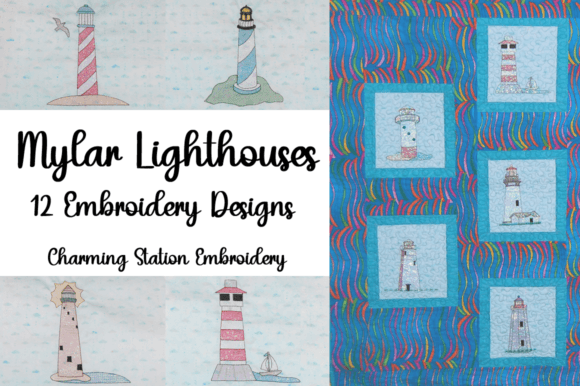
I laid out my usual booth lineup — embroidered tote bags, linen aprons, cotton tea towels, denim caps, woven pouches, and pillow covers — and mentally placed each of the 12 Mylar Lighthouses designs across them. Here’s what stood out:
- Tote bag design: A medium-sized lighthouse centered on a natural canvas tote? Instant magnet. The Mylar catches booth lighting and sunlight alike — no extra embellishment needed.
- Apron embroidery: On the chest pocket or lower corner, one lighthouse adds charm without overwhelming. Especially strong on oatmeal or indigo linen — fabric texture enhances, not hides, the sparkle.
- Tea towel embroidery: Perfect scale for a single lighthouse near the hem. Works beautifully on waffle-weave and terry — just use light cutaway stabilizer to prevent Mylar shifting during stitching.
- Embroidered patch: These translate flawlessly into sew-on or iron-on patches. Customers love grabbing a set of three to personalize backpacks or jackets — and 12 designs means variety without repeating.
- Caps and curved surfaces: Smaller lighthouses (under 3”) hold up well on structured caps — but avoid dense stitch areas near the bill curve. Test first.
- Pillow covers & market bags: Bold, large-scale versions anchor these items visually. The Mylar reflects ambient light in a way flat thread simply can’t — making your booth feel brighter and more curated.
What Makes Mylar Lighthouses a Smart Production Choice
This isn’t just pretty — it’s practical. As a working embroidery designer, I value files that convert smoothly from digital embroidery file to finished product. Mylar Lighthouses delivers:
- At-a-glance readability: Each lighthouse has clear silhouette and defined tower/lantern structure — no squinting at tiny details in your embroidery software.
- Flexible sizing: Works as a subtle accent (1.5”) or bold focal point (4.5”). No redesigning needed for different products.
- Strong online performance: Photographs cleanly on light and mid-tone fabrics. The Mylar adds dimension in flat-lay Etsy listings — critical for scroll-stopping appeal.
- Batch-friendly: Consistent stitch density across the set means reliable hooping, minimal thread breaks, and predictable run times. Ideal for pre-fair production sprints.
Careful-Use Notes Every Embroiderer Should Know
Even the best machine embroidery design needs thoughtful execution. With Mylar Lighthouses, keep these practical realities in mind:
- Avoid placing dense stitch areas directly over thick seams or heavy fabric folds — Mylar can lift or crease.
- On textured towels or slubbed linen, reduce top tension slightly and use a sharp needle (size 75/11) to pierce cleanly through Mylar layers.
- Small lettering or fine window details may blur on dark fabric — test contrast with white or silver Mylar before committing.
- Designs under 2” may lose definition — especially lantern glow elements. Stick to 2.25” minimum for caps and patches.
- Curved cap fronts require precise digitizing alignment — confirm spacing and orientation in your embroidery software before hooping.
How Mylar Lighthouses Elevates Your Brand & Booth Presence
In a sea of handmade product displays, Mylar Lighthouses adds instant visual hierarchy. That subtle sparkle draws eyes across the aisle — not with noise, but with warmth and craftsmanship. It reinforces perceived value: customers associate Mylar with intentionality and finish, not shortcuts. For boutique makers building brand consistency, these designs slot seamlessly into coastal, nautical, or minimalist collections — and pair effortlessly with neutral thread colors like navy, sand, slate, and ivory. Most importantly, it sparks engagement: shoppers pause, tilt their heads to catch the light shift, and ask, “Is that real foil?” — opening the door to conversation, story, and sale.
Essential Designer Checks Before You Stitch
Before turning Mylar Lighthouses into your next craft fair product, do these six things:
- Test the embroidery file on scrap fabric matching your final product — same weight, weave, and color.
- Check thread contrast against Mylar — especially on dark backgrounds. A slight sheen mismatch can mute the effect.
- Review spacing between lighthouse elements and borders — tight margins risk trimming during finishing.
- Confirm hoop size compatibility with your machine and project type (e.g., cap frames vs. standard hoops).
- Inspect stitch density in the lantern and base areas — high density + Mylar = potential puckering if stabilizer is too light.
- Create at least one real mockup — not just a printable mockup — and photograph it in natural light and booth lighting.
And always verify commercial licensing terms before selling finished products — especially if you’re an Etsy seller or wholesale partner. When used intentionally, Mylar Lighthouses isn’t just another digital embroidery file. It’s a strategic craft fair product asset — one that balances beauty, function, and quiet confidence in every shimmer.