Reindeer Applique: A Craft Fair-Ready Embroidery Design
First Impression: Festive, Friendly, and Family-Friendly
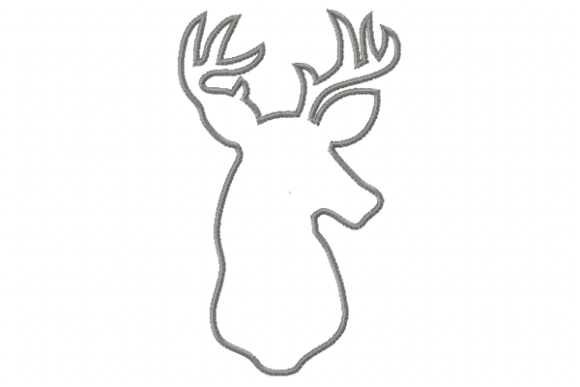
Right off the bat, Reindeer Applique lands with warm, approachable charm—not overly whimsical, not stiffly traditional. It reads as festive without being holiday-limited, soft enough for children’s quilts yet bold enough to anchor a market bag or apron. As an embroidery designer who’s curated over 200 craft fair booths, I can tell you this: it avoids the “too-cute” trap that drowns in detail, and sidesteps the “too-minimal” flatness that disappears on textured fabric. It’s got presence—friendly eyes, clean antler lines, and a silhouette that reads clearly at 3 inches wide. That’s gold for handmade product displays.
Where Reindeer Applique Shines On Real Craft Fair Products
This machine embroidery design thrives where personality meets practicality. On a natural linen tea towel? Instant warmth—customers pause mid-aisle. On a heavyweight cotton tote bag? It holds its shape and tells a story before you say a word. As an embroidered patch sewn onto a denim apron? It adds heirloom texture and signals intentional craftsmanship. And yes—it works beautifully on pillow covers and small fabric pouches, especially when paired with coordinating thread colors like heather gray, forest green, and creamy ivory.
For Etsy sellers and small shop owners, Reindeer Applique is a quiet powerhouse: it photographs cleanly against neutral backdrops, scales well in printable mockups, and supports cohesive branding across product lines (think matching tea towels + pouches + gift tags). As a freebie, it’s also a smart lead magnet—offer it with a newsletter signup and watch your digital embroidery file list grow.
What Makes It Booth-Strong and Batch-Friendly
In real-world craft fair prep, clarity is currency. Reindeer Applique delivers that: no tiny lettering, no micro-details that vanish under booth lighting, no nested elements that confuse your embroidery software. It’s a single-layer applique—meaning fewer color changes, smoother transitions between fabrics, and faster hooping. That directly translates to higher throughput during pre-fair production runs.
It’s equally flexible in scale: use it at 2.5" as an accent on a child’s cap (just mind the curved surface), or expand to 4.5" as a focal point on a market bag. Its balanced stitch density means it won’t pucker thin cottons nor drown thick canvas—provided you match stabilizer to fabric texture. For textured towels or looped terry, a medium-weight cutaway stabilizer keeps edges crisp and prevents shifting.
Careful-Use Notes Every Designer Should Check
- Dense stitch areas: Antler tips and eye details may compress on plush or heavily napped fabrics—always test on scrap first.
- Dark fabric impact: This design relies on contrast. On charcoal or navy, avoid light thread unless you’re using high-sheen rayon or metallic for lift.
- Small-scale clarity: Below 2", the reindeer’s facial features soften. Reserve sub-2" sizes for patches only if backed with fusible web and topstitched.
- Curved surfaces: Caps and curved pouch seams demand precise hooping. Use a cap frame or basting spray—and never skip the test run on a spare panel.
- Fabric texture matters: Quilting cotton? Perfect. Heavy twill or boiled wool? Add tear-away + cutaway combo stabilizer to prevent tunneling.
How It Elevates Your Handmade Product Line
Customers don’t just buy embroidery—they buy feeling. Reindeer Applique quietly signals care, nostalgia, and handmade quality. It strengthens booth display strength by creating visual rhythm: group three sizes (small pouch, medium towel, large pillow) in a staggered layout, and it becomes a mini-collection—not just a design, but a theme. That drives basket-building behavior: “I’ll take the towel *and* the pouch.”
For boutique makers and creative entrepreneurs, it also reinforces brand consistency. Use the same thread palette across all items—say, oatmeal, moss, and slate—and suddenly your entire table feels intentional, curated, and premium—even if you’re selling $28 tea towels. That perceived value lifts average order value and invites repeat buyers.
Embroidery Designer Notes You Can’t Skip
- Test on scrap fabric—same type, same dye lot, same wash history—as your final product.
- Check thread contrast before stitching the first dozen. Light thread on light fabric fades fast in booth lighting.
- Review spacing and margins—especially if combining with text or borders on aprons or tote bags.
- Confirm hoop size compatibility with your machine. If it pushes 5x7", verify clearance on your frame before batch-cutting.
- Inspect stitch density visually—not just in software. Overly dense fills cause stiffness; too loose looks unfinished.
- Match stabilizer to fabric weight and use case. A kitchen towel needs more stability than a quilt block.
- Create at least one real mockup—not digital, not printed—stitched, pressed, and styled as it’ll appear in person.
- Compare fabric colors in daylight and indoor light. What looks warm in studio light may read cool under market tent LEDs.
- Verify commercial licensing before selling finished products. Since Reindeer Applique is listed as a freebie, double-check usage rights—especially for resale of physical goods.
Final Thought: A Quiet Standout With Real Sales Legs
Reindeer Applique isn’t flashy—but it’s reliable, versatile, and emotionally resonant. In a sea of glittery fonts and trendy motifs, it stands out by being genuinely usable, consistently charming, and quietly professional. It’s the kind of embroidery file that sells itself through thoughtful application: on a child’s quilt, yes—but also on your best-selling tote bag, your signature apron, your most-photographed tea towel. For craft fair sellers, Etsy sellers, and small-batch embroidery businesses, that’s not just convenience. It’s confidence—one stitch, one sale, one happy customer at a time.