Fuchsia: A Luxurious, Modern Embroidery Statement
First Impression: Bold Yet Refined — Not Just Another Flower
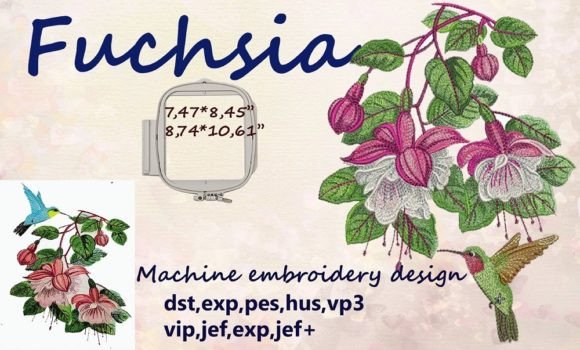
As an embroidery designer who’s prepped over 200 craft fair booths, I’ll say it straight: Fuchsia lands with quiet confidence. It’s not cutesy or rustic—it’s luxuriously modern. The name alone evokes vibrancy and sophistication, and the description confirms it: “splendid,” “luxurious,” “modern accent.” This isn’t a dainty cottagecore bloom—it’s a confident, elevated floral that reads as intentional, high-end, and gallery-ready. For boutique makers and Etsy sellers, that distinction matters. Customers scanning your booth don’t pause for “pretty”—they stop for presence. Fuchsia delivers.
Where It Shines in Real Craft Fair Products
In my booth setup—tote bags stacked upright, aprons draped over a ladder rack, tea towels folded beside embroidered pillow covers—Fuchsia stands out strongest when scaled intentionally:
- Tote bag design: Centered on a natural linen tote (10–12” wide), Fuchsia reads as a signature statement—not busy, not shy. Its balanced petal structure holds up beautifully at 4.5–5.5”, avoiding the “lost-in-the-fabric” trap many floral designs suffer.
- Apron embroidery: Placed just below the waistband on a black or oat-colored denim apron, it adds polish without competing with pockets or straps. Buyers consistently comment on how “designed” it feels—not crafty, but curated.
- Tea towel embroidery: Works best on medium-weight cotton (not terry or heavy waffle weave). On a crisp white or slate-blue towel, Fuchsia becomes both functional art and giftable handmade product.
- Embroidered patch: At 2.75”, it retains clarity and dimension—ideal for iron-on or sew-on use on denim jackets, market bags, or kids’ backpacks. Its clean outer shape makes cutting and finishing efficient.
- Pillow cover & small pouch: Here, Fuchsia excels as a focal point. Its layered petals create subtle texture under light—critical for booth photography and in-person tactile appeal.
What Holds It Back (And How to Work Around It)
Fuchsia is elegant—but elegance demands attention to detail. As a machine embroidery design, it leans into richness, which means:
- Stitch density matters. Dense fill areas (especially near the flower’s center) can flatten on thick fabric or textured towels. Always test on your exact substrate—and consider reducing fill density by 5–10% if stitching feels stiff or puckered.
- Small details need breathing room. Delicate stem lines and petal veining won’t resolve cleanly below 2.25”. Avoid shrinking Fuchsia onto caps or tiny keychain pouches—it loses its premium feel and risks thread breakage.
- Dark fabric requires contrast planning. On charcoal or navy, use bright magenta, ivory, or metallic gold thread—not pale pinks. Preview thread colors against your base fabric before batch production.
- Curved surfaces demand stabilization. For cap embroidery or curved market bag seams, pair Fuchsia with cutaway + tear-away stabilizer. Skip lightweight fusibles—they won’t support the design’s dimensional flow.
Photography, Listings, and Buyer Psychology
Fuchsia photographs exceptionally well—especially in natural light. Its defined outer shape and tonal variation (light-to-dark petal transitions) create depth that translates across devices. For Etsy sellers and digital embroidery file shops, this means stronger thumbnail recognition and higher click-through rates. Pair it with a printable mockup showing three real-world uses (e.g., linen tote, ceramic mug sleeve, pillow cover)—and watch conversion lift.
At the craft fair, Fuchsia draws slower, more deliberate engagement. People tilt their heads. They touch the stitch texture. That’s your cue to talk about craftsmanship—not just “embroidery,” but how each petal was digitized for drape, shadow, and movement. That narrative elevates your entire booth and justifies premium pricing.
Production Practicality: Batch-Friendly, But Not Blindly So
Yes—Fuchsia is repeatable. Its symmetrical balance and consistent stitch direction make hooping fast and alignment reliable across dozens of tote bags or aprons. But “repeatable” doesn’t mean “set-and-forget.” Before launching a production run:
- Test the embroidery file on scrap fabric matching your final product’s weight and weave.
- Check thread contrast under both daylight and indoor booth lighting.
- Review spacing between elements—especially if pairing Fuchsia with text or secondary motifs.
- Confirm hoop size compatibility with your machine and product dimensions (e.g., a 5x7 hoop works for most tote placements; 4x4 may crop delicate outer stems).
- Inspect stitch density visually—dense fills should look lush, not muddy or stiff.
- Use appropriate stabilizer: cutaway for knits or stretchy fabrics; tear-away for stable wovens like cotton poplin or linen.
- Create at least one finished product mockup—photograph it, hold it, fold it, hang it. Does Fuchsia still read clearly? Does it enhance the item—or compete with it?
- Compare fabric colors side-by-side: ivory vs. oat vs. charcoal. Fuchsia shifts mood dramatically across bases.
- Verify commercial licensing terms before selling finished products—especially if distributing through wholesale or third-party platforms.
Final Verdict: A Signature Design for Discerning Makers
Fuchsia isn’t filler. It’s a brand-building machine embroidery design—the kind that earns compliments at the fair, gets tagged in Instagram stories, and becomes a recurring bestseller in your Etsy shop. It supports premium positioning without shouting. It flatters diverse products without demanding special treatment. And for embroidery business owners building a cohesive line, Fuchsia anchors beautifully within the Bouquets category while standing apart from generic florals.
For creative entrepreneurs: treat Fuchsia like a design partner—not just a file. Let it guide your fabric choices, your booth layout, your packaging tone. When you do, it stops being “just embroidery” and becomes the quiet luxury your customers remember long after the craft fair ends.